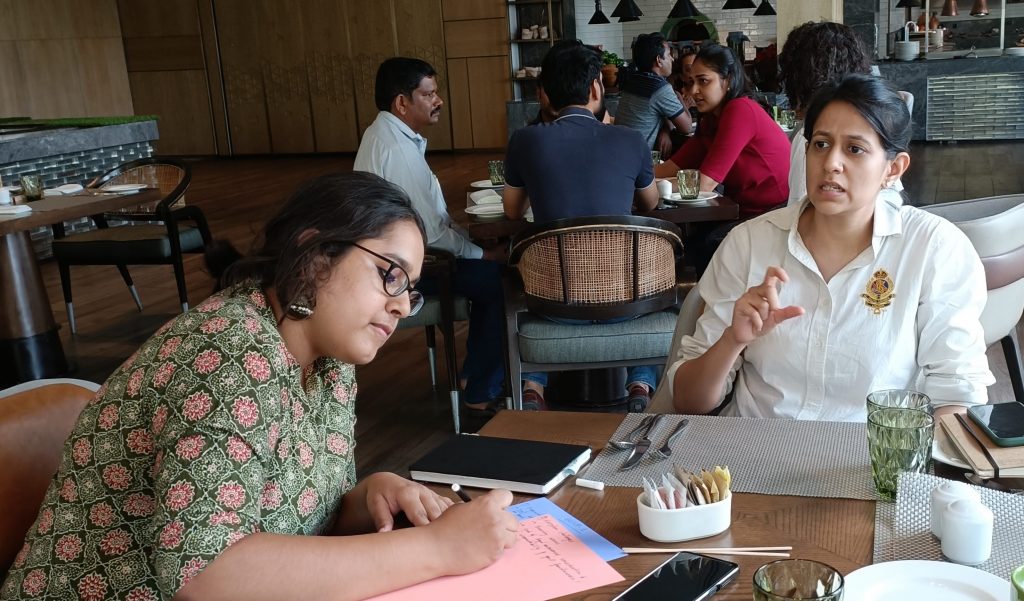
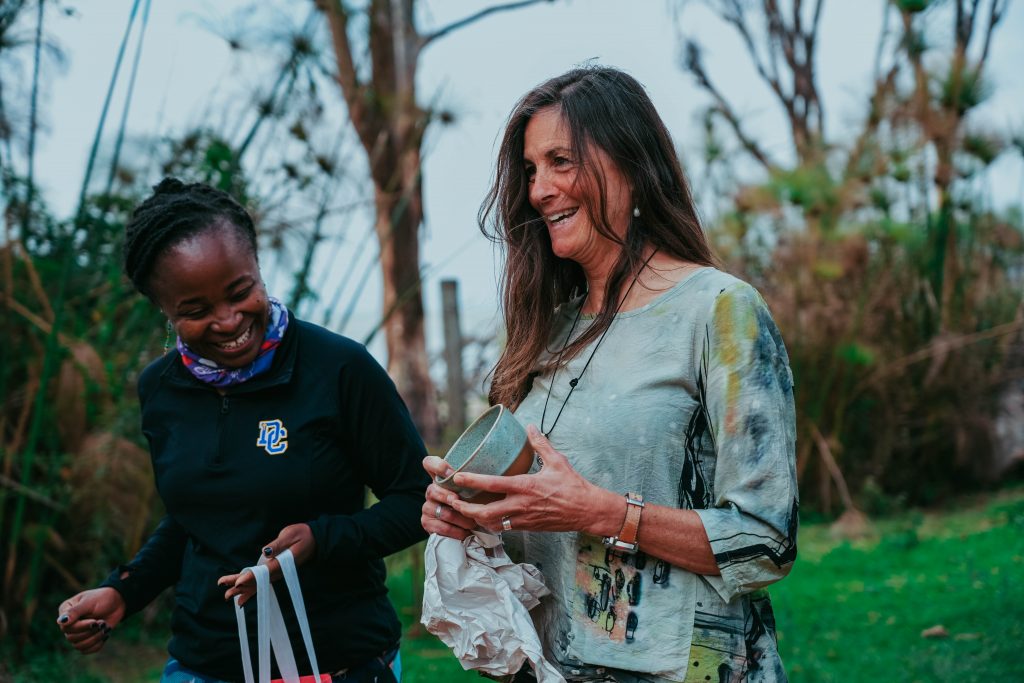
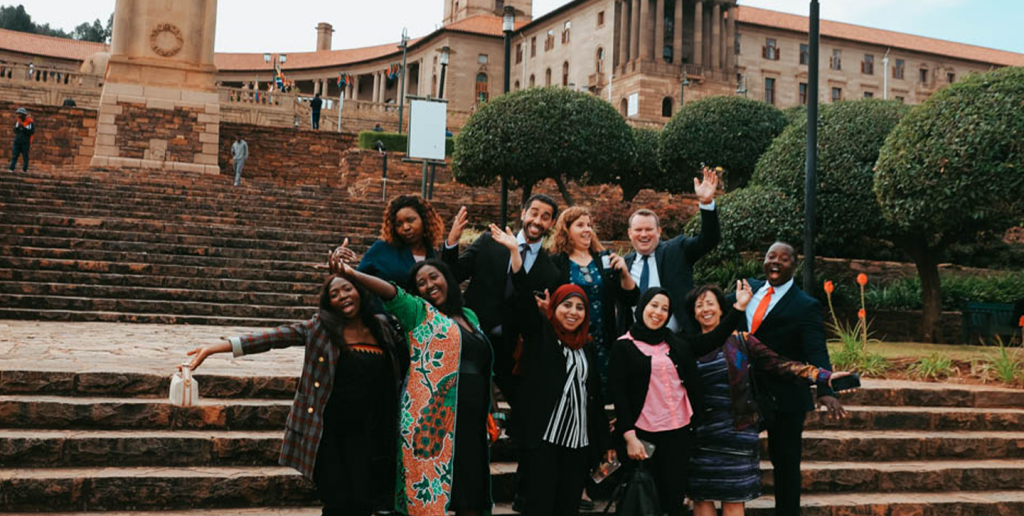
Later in the week, we had our first in-class session, followed by a 'Social Innovation Happy Hour' in our brand-new home/training space/office - which was the first time we opened our doors to our partner organizations and friends in Nairobi. It was great to see so many friendly faces and new connections forming as different networks mixed and mingled.
So check out the pictures below to get a feel for our new home. And if you are in Nairobi, come visit!
The stripes on a zebra are one of the most famous examples of "nature as innovator" - the alternating absorbing (black) and reflecting (white) stripes create an air current that keeps the zebra cool, and which many architects are now inserting into building design to save on energy costs.
“One amazing thing about nature is that it’s easily accessible, even in cities. Let us learn then to tap into it physically, mentally and emotionally. Gaining from it but with gentleness and peace, not forgetting that we human beings are nature.”
So says Dharshan Wignarajah, speaking with both passion and caution about Mother Nature. Born in Sri Lanka, Dharshan grew up in London but spent holidays with family back in Sri Lanka. He worked for over 6 years in the renewable energy industry, an experience that saw him develop several projects impacting thousands of people from South Africa, the Philippines, Sri Lanka, India and China. He has since then moved to London where he runs a consultancy focusing on organizational learning and leadership.
Little would he have known, though, that those childhood holidays would greatly shape some of his beliefs today. As one of the Amani Institute instructors Dharshan will be covering Bio-Empathy, one of the courses in the Post Graduate Certificate in Social Innovation Management
Dharshan describes Bio Empathy as the ability of emerging leaders to tune themselves to learn from nature. The course will explore various approaches that will see the participants opening themselves up to nature, getting inspired and learning more about themselves. They will explore concepts such as: how can we adapt to changes, evolving in a way that allows us to survive? This requires designing “life-friendly” approaches, through efficient utilization of our natural resources as well as integrating development with growth.
At the end of the course, participants will have gained insight on how they can partner with nature to design systems that will solve human problems. With over 3.6 billion years of evolution, nature offers us a huge base to learn from. A famous example of how nature has shaped technology is how the Wright Brothers, who succeeded in flying the first aircraft in 1903 derived their inspiration from pigeons in flight. A century later, a company called Lincoln Renewable Energy is looking to build wind turbines whose shape resembles the wings of a bee.
For emerging leaders in the social sector, Dharshan had the following tips to share:
Social change is not easy
Have unflagging enthusiasm
You will fall countless times but you should learn to pick yourself up and keep going.
Expect lots of goodwill and positive human response.
Try not to change everything at once. Choose at least one thing to channel your energy to.
-------------
This interview was conducted by Martha Diana, who has worked with youth across Kenya, Tanzania, India and Uganda through AIESEC. Her passion is in career development, talent management, organizational development and education. She is currently a volunteer for Amani Institute.
Teaching storytelling at the Amsterdam School of Creative Leadership
Ever since the Barack Obama 2008 Presidential Campaign used storytelling to such great effect, storytelling in professional settings has been on an upswing. People are seeing its value not just in political organizing but also social change making and business management.
Why is this so?
Humans interpret the world in two ways: through narrative and through analysis. Analysis uses critical reasoning and evidence and deliberation to teach us how to act. Narrative uses story and emotion to teach us how we feel about things, which in turn tells us why we act.
Unfortunately, in nearly all of our communications, we tend to use analysis to persuade others, despite all the evidence suggesting that people are more effectively moved by stories. When it comes to getting people to act, the most brilliant piece of big-picture analytical reasoning is simply no match for the well-told, detail-filled, specific story.
Take, for instance, Acumen’s Jacqueline Novogratz. In her effort to demonstrate the interconnectedness of humanity in today’s world, the Acumen Fund founder could present an economic analysis about international trade and flows of goods and services.
Nobody would remember a word of it.
Instead she tells the story of her ‘blue sweater’. The sweater, which pictured zebras grazing in front of Mount Kilimanjaro, was Novogratz’ most beloved article of clothing throughout middle school. After a ninth grade classmate made fun of Novogratz for wearing the now ill-fitting sweater, during her freshman year of high school, Novogratz’ donated it to Goodwill. Fast-forward ten years: Novogratz is living and working in Rwanda when she sees a young boy wearing the exact same sweater. She runs over to him, looks at the sweater’s tag. Sure enough, her name is there, in faded black ink. The story makes the same point about the interconnectedness of humanity in a modern economy as a presentation on trade flows would—but it makes that point better. In a way we'd remember it.
Our storytelling workshops are based on Marshall Ganz' Public Narrative technique, developed at Harvard and used to transformative effect in the Obama presidential campaign.
Public Narrative is the art of translating values into action, through stories, and thus persuading people to help you make change. In the course, we explore storytelling as a leadership skill, breaking an effective story down into its three component parts and practicing each part before integrating back into the whole. We study videos of masters of this art, both expected virtuosos (Obama, Martin Luther King Jr, Shakespeare) but also some perhaps unexpected ones (Bono, J.K. Rowling, Sir Ken Robinson).
Each participant also develops their own story. And nearly always, when participants deliver their own public stories, I find myself wowed, half the time wiping away tears and the other half reduced to fits of laughter. It’s a tool that works, with the potential to transform the way we work with others (colleagues, clients, investors, partners, customers, etc) by focusing on why we do things and not merely on what we have to do.
We are SO PROUD to announce the participants in our first-ever Certificate in Social Innovation Management program, to be held in Nairobi from June - October 2013. This program embodies our vision for the direction that higher education must take, and the 15 participants exemplify the type of people who will be able to think outside the box to shape the future. They were selected from more than 150 applicants, and they come from 12 different countries. Click here to meet them all!
The Future is Agile: The innovation cycle is speeding up all the time. Innovation takes place in a continuously iterative process whose core is the process of co-creation and the exploitation of new discoveries. Innovation programmes therefore need to make use of this short-cycle dynamic. Education, too, should acknowledge this iterative creative capacity. We need self-assured, passionate, modern, creative people to shape the future. Their adaptability, flexibility, and ability to think outside the box will be crucial.
We couldn't agree more! This is why we absolutely can't wait for them to join us in Nairobi, in just under 3 weeks, to begin this journey together!
This week, we are delighted to announce the list of courses and the people who will lead them for our upcoming Certificate in Social Innovation Management course, starting on June 1st. Check them all out here(and see a simple list below).They are a fabulous set of people from around the world and we're honored to be working with them over the rest of the year.
When I say that “everyone has to pass the bar now,” I mean that, as the world got hyperconnected, all these things happened at once: Jobs started changing much faster, requiring more skill with each iteration. Schools could not keep up with the competencies needed for these jobs, so employers got frustrated because, in a hyperconnected world, they did not have the time or money to spend on extensive training. So more employers are demanding that students prove their competencies for a specific job by obtaining not only college degrees but by passing “certification” exams that measure specific skills - the way lawyers have to pass the bar.
We don't have exams! But, like Friedman, we believe in the development of specific skills that will be crucial to success in leading social change in the 21st century. These are the skills that we're providing in our courses. And the instructors teaching them all embody and practice these skills in their own professional work - they were invited to teach at the Amani Institute as practitioners not academics. They do this work. For real.
Skills and Skill-Builders - Certificate in Social Innovation Management, 2013
Bootcamp: Skills and Mindsets for the New Manager - Rajiv Ball, Partner @ THNK; Former Partner @ McKinsey and Company
Design as a Change Agent - Rupa Chaturvedi, Founder @ Raaya Design
Social Entrepreneurship - Roshan Paul, President @ Amani Institute